 |
|||
 |
|||
 |
 |
 |
|
 |
|
 |
 |
 |
|||
 |
|||
 |
|||
 |
|||
 |
 |
|
fq96mi312au Comparison of Web Hosting Services: A Beginner's GuideIn the ever-evolving digital landscape, choosing the right web hosting service can be as challenging as navigating a labyrinth. The decision is crucial for the success of your website, whether you are a blogger, a small business owner, or an entrepreneur embarking on a new venture. This guide aims to shed light on the various web hosting services available, offering insights to help you make an informed decision. First and foremost, Shared Hosting is often the go-to choice for beginners due to its affordability and simplicity. It involves multiple websites sharing the same server resources, which can lead to performance issues if one site experiences high traffic. However, for a personal blog or a small website, shared hosting is usually adequate and cost-effective. On the other hand, VPS Hosting (Virtual Private Server) offers a middle ground. It provides a dedicated portion of a server's resources, ensuring better performance and more control compared to shared hosting. While slightly more expensive, VPS hosting is ideal for medium-sized businesses or websites expecting moderate traffic. The flexibility and scalability it offers make it a popular choice among growing businesses. Dedicated Hosting takes it a step further by offering an entire server for your exclusive use. This option provides unparalleled performance, security, and control, making it suitable for large businesses with significant traffic demands. The downside? It comes with a hefty price tag and requires technical expertise to manage. For those seeking cutting-edge technology, Cloud Hosting has gained traction in recent years. It utilizes a network of interconnected servers to host your website, ensuring reliability and scalability. The pay-as-you-go pricing model can be advantageous, allowing you to pay only for the resources you use. Cloud hosting is particularly beneficial for websites with fluctuating traffic patterns, providing resilience and flexibility. Furthermore, Managed Hosting services can alleviate the technical burden by handling server management tasks on your behalf. This is a valuable option for those lacking technical skills or simply wishing to focus on their core business activities. Managed hosting is available across various hosting types, offering peace of mind through expert support. When selecting a web hosting service, it is essential to consider factors such as uptime guarantees, customer support quality, and the availability of essential features like SSL certificates, backups, and security measures. Each hosting provider has its strengths and weaknesses, and reading user reviews can provide valuable insights.
In conclusion, the choice of web hosting service significantly impacts your website's success. While shared hosting may suffice for beginners, businesses with higher demands should consider VPS or dedicated hosting. Cloud hosting offers modern solutions for scalable needs, while managed hosting provides expert assistance. Ultimately, the right hosting service depends on your specific requirements and long-term goals. https://www.ionos.com/digitalguide/hosting/technical-matters/best-web-hosting-services/
A comparison of five of the best hosting services. In 2018, IONOS won the Hosting & Service Provider Award in the web-hosting category. https://www.a2hosting.com/web-hosting/compare/
Your choice of web host has a direct impact on your sites' speed and can be ... https://hostadvice.com/tools/web-hosting-comparison/
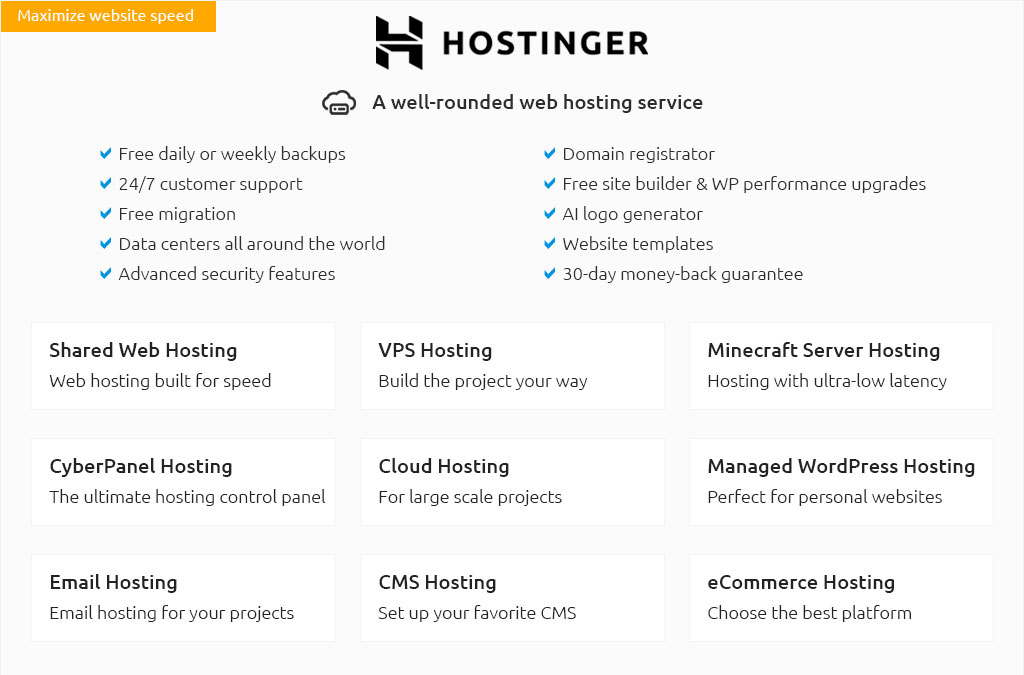
Currently Top 5 Most Popular Hosting Companies ; 1 Best Overall. Ultahost ; 2 Best Cheapest Hosting. IONOS ; 3 User's Top Choice. Hostinger ; 4 Best Shared Hosting.
|
